

Alexis Dawes, Emma Mazeika and Sierra Libron
Damsels in Distress: How Injury Affects Larval Damselflies
Abstract:
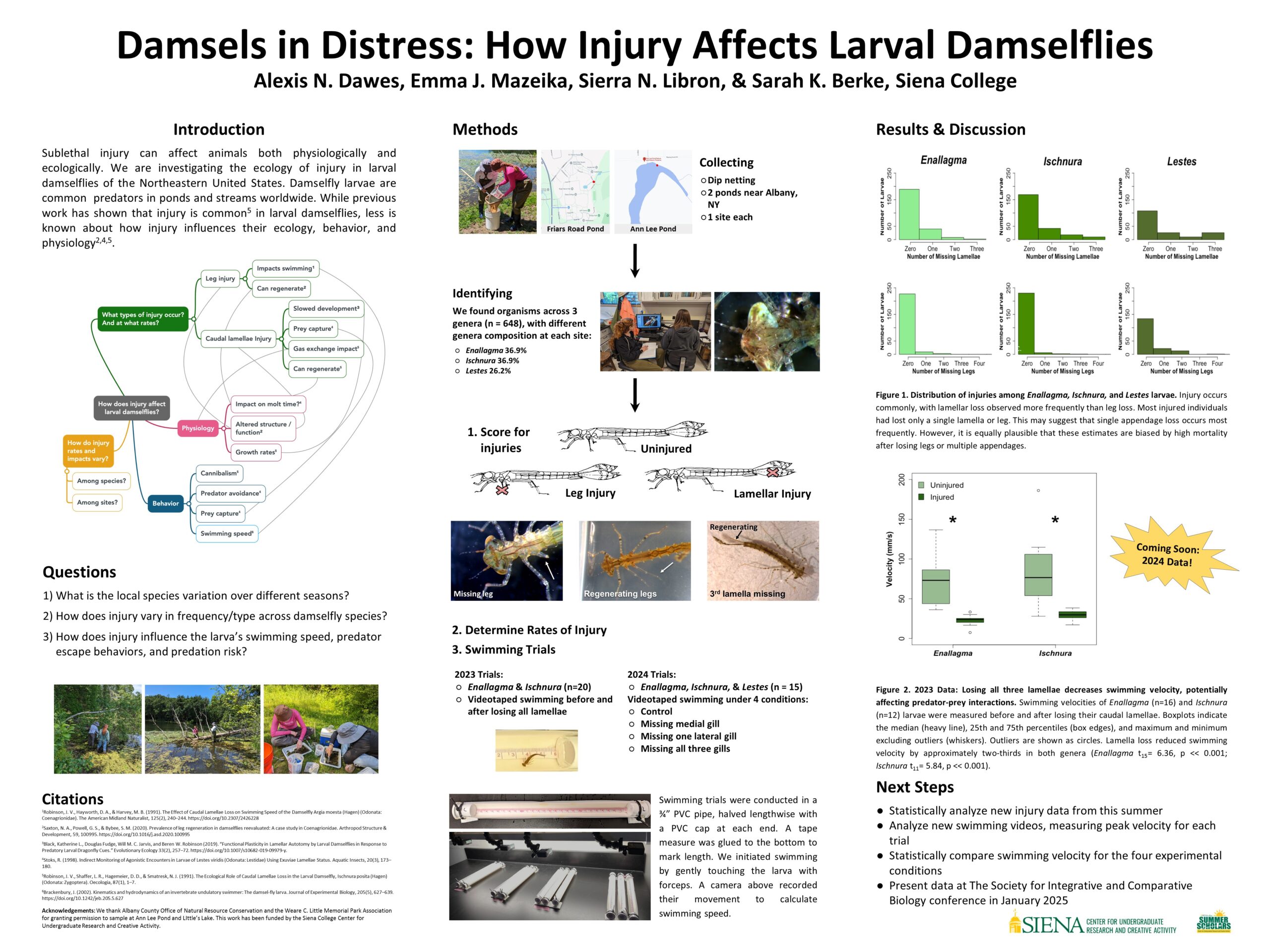
Invertebrates are critically important components of aquatic ecosystems worldwide. Many freshwater invertebrates represent the larval stages of terrestrial insects. Damselflies, for example, lay eggs in ponds and streams that hatch into flightless, fully aquatic larvae. These larvae spend weeks to months feeding and growing underwater before undergoing a terminal molt and emerging as winged adults. Larval damselflies are predators of smaller invertebrates, and are themselves prey for larger insects, fish, and amphibians. Interactions with predators, even when not lethal, can result in injury, such as the loss of a limb or other appendage. Such injuries would potentially influence an individual’s growth, ecological function, and future reproductive success. Damselflies have six legs as well as three large posterior gills; these gills are used for both gas exchange and for swimming. Gills are frequently lost to predator encounters; we would expect such loss to influence multiple aspects of the larva’s biology including swimming speed, predator avoidance behaviors, and predation risk. We will present data for rates of gill and leg injury for larvae in the genera Enallagma, Ischnura, and Lestes at ponds in the northeastern United States. We will also present comparative data from experiments to quantify swimming velocity following lamellar injury for these genera.Title
Damsels in Distress: How Injury Affects Larval Damselflies
Faculty Advisor
Dr. Sarah K. Berke
Location
Table 39